New holiday home law: energy requirements and adaptation period
The new Law 6/2025 on Sustainable Management of the Tourist Use of Housing is already in force in the Canary Islands. This regulation introduces new conditions to develop the holiday rental activity, including certain requirements related to energy rating and the use of renewable energies.
The homes that were already operating do not all have to be adapted immediately. The law establishes a transitional period that, depending on the situation of each property, can be extended for five years. Therefore, it is important to check in time which regime applies to each home and what actions could be necessary to maintain tourist activity.
Is there a moratorium on existing vacation homes?
Although there is usually talk of a moratorium, legally it is a transitional period.
Holiday homes duly authorized before the entry into force of the law that cannot benefit from the consolidated tourist use regime may continue to operate for five years under the previous conditions. This period ends, in general, in December 2030.
In certain cases, an extension of up to five additional years may be requested, but it will not be automatic: it must be justified and approved by the corresponding council.
The owners who are also owners of the farm may study the possibility of requesting the declaration of consolidated tourist use. Each house must be analyzed individually, since the age of the registration, the ownership, the municipal planning and the existing documentation can change its situation.
Energy requirements for holiday homes
Homes that need to obtain a new tourist authorization must comply with the technical and energy conditions established in current regulations
Minimum energy rating
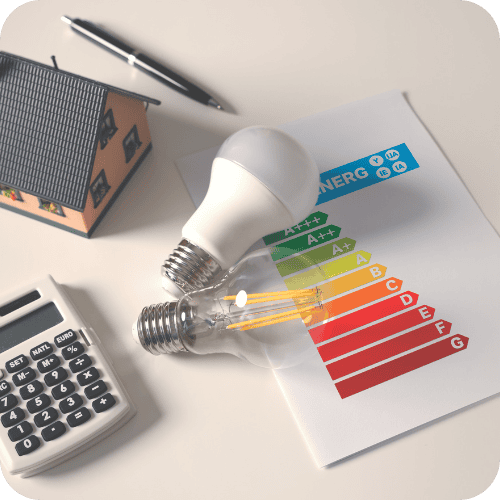
The law establishes a minimum energy rating F for buildings legally existing before December 31, 2007 and a minimum rating D for subsequent ones.
A home that does not reach the required rating may need energy improvements before submitting a new responsible declaration.
Production of hot water with renewable energies
Homes prior to 31 December 2007 must achieve a minimum of 70% of domestic hot water production through renewable energies. For subsequent homes, the percentage increases to 90%.
This requirement can be met through solar thermal energy or other equivalent renewable solutions such as the installation of solar panels, provided that there is the corresponding technical justification.

Is it mandatory to install photovoltaic panels?:
The law does not generally oblige all vacation homes to install photovoltaic panels. However, a solar installation will improve the energy rating and prepare the property for new requirements.
The appropriate solution (solar terminal, photovoltaic or both) will depend on the consumption, the age, the hot water system and the characteristics of each house.

Get ready before the transitional period ends
Waiting until the end of the deadline can cause accumulation of requests, difficulties in finding installers and delays in adaptation.
At SOTELAN PLUS we study photovoltaic installations for holiday homes in Lanzarote and propose solutions adjusted to the real consumption of the property.
Request information and check in advance if solar energy can help you improve the energy efficiency of your home.


Other advantages of installing solar panels in your holiday home:

Increase in property value
Homes with solar installations usually have a higher energy rating, which increases their value in the real estate market.
Savings on electricity bills can mean amortization of around 4 or 5, and then a significant annual savings

Carbon footprint reduction and energy efficiency certificate
By using solar energy, the house reduces its environmental impact, so the energy efficiency certificate would be improved from category G to category A or B depending on the case, and if you opt for solar ACS modalities as well.
Here you can see some interesting videos of our company related to solar panels:


 English
  Spanish